
NJ farmers crushed after freak freeze destroys nearly $300M in crops
🚨 New Jersey farmers are facing catastrophic crop losses after a brutal April freeze wiped out peaches, cherries and apples across the state.
🍑 Gov. Mikie Sherrill declared a farming state of emergency as losses top $300 million and some orchards report near-total devastation.
🍓 There’s still hope for Jersey Fresh blueberries and strawberries as officials urge residents to support local farms and markets.
The Garden State’s farms and gardens are in a state of emergency — declared by Gov. Mikie Sherrill.
New Jersey crop disaster after April freeze devastates farms
Growers are reporting losses so far of at least 30% of many crops, while others are declaring total losses, with an estimated loss of at least $300 million, according to the State Department of Agriculture.
ALSO READ: Famous NJ falcon family has new chicks and you can name them

This is a once-in-a-generation, if not longer, event for the industry, state Agriculture Secretary Ed Wengryn said.
There was a warm week in April, hitting between 80 and 90 degrees. This heat spurt pushed the fruit trees around the state, like cherry, pear, and peach trees, to flower, leaf out, and grow, Wengryn said.
The following weekend, the state was hit with 20-degree weather. The first night, farmers were able to bring heat and air movement to the fields. But the second night was just too much for them, and the fruit bushes froze.

No cherry season in NJ and massive peach, apple losses
With peaches, for example, the tiny fruits froze and fell off. Cherries, the same thing, destroying the season altogether, and apples are looking at a 90% loss, Wengryn said.
As a result, Wengryn said there will be no cherry season in New Jersey this year, and pears took a beating as well.
There will be a very limited number of peaches available.
With apples, it’s a good idea to check with pick-your-own orchards. It’s still not clear if they will just use whatever fruits that are salvageable to make pies and other foods, or if they will have people come and take part in picking their own. It’s just too soon to tell.
The cold also proved to be very devastating for grapes in New Jersey because it affected more than just this season’s loss.
“Grapes lost the current year’s flowering of their fruit, and also the growth that would start next year’s vines and next year’s flowering, so we could potentially have a two-year loss of wine grapes in the state,” Wengryn said.
Blueberries, strawberries and Jersey Fresh crops survive freeze
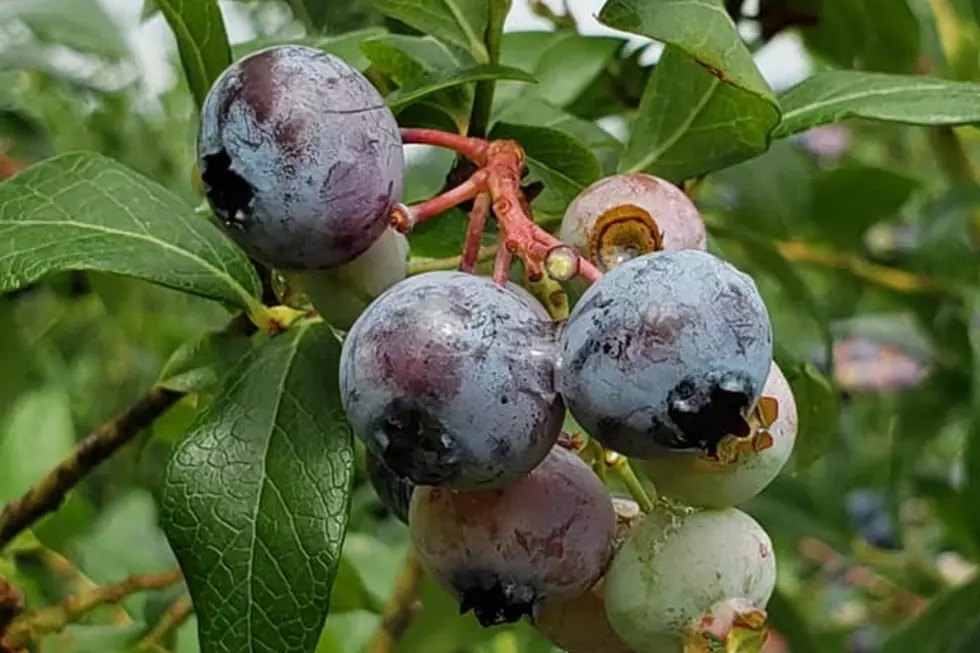
However, there is a silver lining. It looks like there will be a blueberry season in New Jersey.
“Farmers got out there. They sprayed water. They coated them. We’re going to have a pretty good blueberry crop. There was about a 30 to 40 percent loss in blueberries in the state. There will be Jersey Fresh blueberries this summer. We want to make consumers aware about that,” Wengryn said.
There will also be a pretty decent strawberry season, too. Asparagus experienced little damage. It looks like corn, tomatoes, and other green vegetables will be okay, too.

One of the many orchards in the state stated on Facebook regarding crops. Battleview Orchards in Freehold said their sour cherry, peach, nectarine, and apple crops have suffered near total loss.
But there is good news. “We were fortunate enough to save our strawberry crop that is currently in season, and they are delicious. We will have our delicious sweet corn and tomatoes this year beginning mid-July, along with other veggies that we planted this season,” Battleview Orchards wrote.
Looking ahead, pumpkins will be planted in June, so there should be plenty available come fall and Halloween season.

State of emergency aims to help struggling NJ farmers survive
With these fruit crop losses comes the $64 million question. “What does this mean for consumers as far as prices?”
The damage happened from the Hudson Valley to the Shenandoah Valley in Virginia.
So, throughout the whole Northeast region, there’s going to be this kind of shortage amongst all these crops. In some areas, certain crops may have survived, so there will be local produce in those regions, Wengryn said.
“So I don’t see great dramatic changes in prices driven by this. It’s really going to be the selection and availability of foods grown close to home that’s going to be the challenge,” Wengryn said.

What will Gov. Sherrill's state of emergency do?
Gov. Sherrill’s state of emergency will offer relief from state regulations for farmers.
Many fruit and vegetable farms are on preserved farmland. If they are on one, that means 51% of the product that they sell has to come from that farm, Wengryn explained.
With the state of emergency, the State Agriculture and Development Committee is going to waive that requirement so farmers can have markets and do things that can keep their businesses going.
So, for example, Wengryn said if a peach farmer also has a vegetable stand, their income this year is not going to come from peaches, but rather from the vegetable stand.

Sherrill visited Russo’s Fruit and Vegetable Farm in Tabernacle in Burlington County this week to assess the damage to their crops.
Wengryn said New Jersey residents can do their part to support local farmers. Continue to visit farms, farmers’ markets, and farm stands. Shop local. Shop Jersey Fresh.
“We’re going to work on our side on emergency management to make sure they’re more resilient next time something like this happens. This was a freak event. We always get an 80 or 90 degree day in April. We never get a week of it like that. That really just pushed everything,” Wengryn said.
So, the quality of fruit will be there in New Jersey. The quantity is more the question.
Report a correction 👈 | 👉 Contact our newsroom
Best spots to pick your own NJ strawberries
Gallery Credit: Erin Vogt

More From WPG Talk Radio 95.5 FM