
Feds Cut Beach Funds: NJ Replenishment Canceled in 2025
You won't be seeing any beach replenishment work happening this winter along the Jersey Shore.
According to The Philadelphia Inquirer, local projects scheduled to be completed this offseason have been canceled because of a lack of funding.
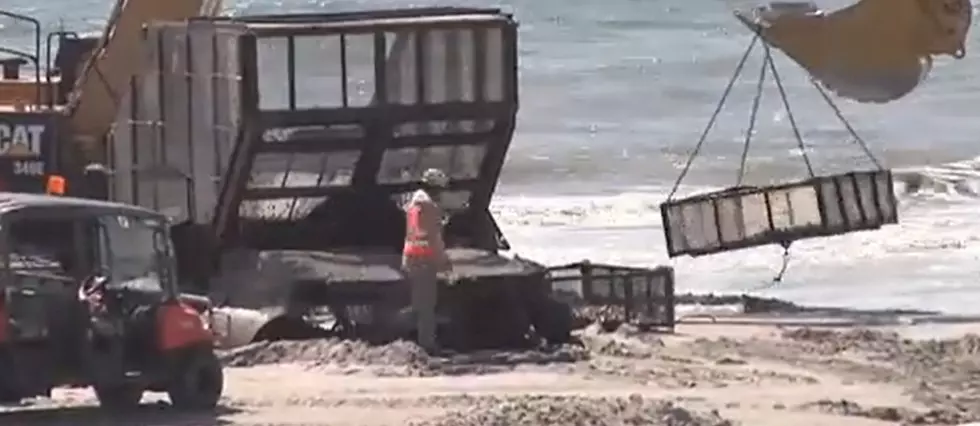
That includes a planned hydraulic fill job expected to move significant amounts of sand through large pipes onto the Avalon beach.
Avalon business administrator Scott Wahl told The Inquirer that "this is the first time in 29 years this has happened."
Congress, which usually allocates as much as $200 million a year for beach replenishment projects nationally, did not allocate any money this year to fight beach erosion.
That's the first complete halt to beach replenishment funding in America since 1996.
Beach Replenishment is Vital to Coastal NJ Towns
Beach replenishment on the Jersey Shore involves adding sand to beaches to fight against beach erosion and to widen them, and create higher dunes to protect against storm surge and wave action.
Beach replenishment added important footage to the Atlantic City beach in the off-season, which the casinos are using to expand their operations with beach bars, and the community is using to attract tourists with wider beaches to use as recreational space.
Beach Replenishment is essential for many New Jersey Shore Towns that are dependent on summer vacationers for their local economies.
U.S. Rep. Jeff Van Drew, whose districts include South Jersey beach towns, told The Inquirer he is advocating for funding to be renewed in 2026.
"At the same time, Van Drew said, "We are looking to make beach replenishment more sustainable. We are working on solutions to reduce the cost of replenishment and mitigate erosion."
The Cost of Beach Replenishment
No one seems to have a good idea for doing beach replenishment more economically.
The value of spending tens of millions of dollars keeping New Jersey's beaches refreshed and stormproof, and ready to act as a barrier against nature, has long been debated.
Should it be the responsibility of the state or federal government to pay?
In cases such as recent replenishment work in Ocean City/Upper Township/Sea Isle City replenishment, the federal government was responsible for 65% of the cost; the state and local municipalities split the remaining 35%.
The beach replenishment programs are one of the most controversial programs within the Corps of Engineers because critics say it robs federal dollars from taxpayers in inland states to rebuild oceanfront communities — only to see the sand wash away.
But, beach tourism in the U.S. accounts for roughly $45 billion in economic activity and generates about $25 billion in federal tax revenue, according to the American Shore and Beach Preservation Association, which works closely with the corps.
In 2024, visitors spent a record $50.6 billion in New Jersey, producing $5.4 billion in state and local tax revenues, reducing the tax burden by $1,545 per household in New Jersey, according to the state’s Division of Travel and Tourism.
One this is certain. If the beaches and the dunes aren't kept up, a storm will eventually come along and wreak havoc in South Jersey. What will that cost be?
New Jersey's Beach Commandments: Do's & Don'ts at the Beach
Gallery Credit: Eddie Davis
25 Must Try Breakfast Spots in South Jersey
Gallery Credit: Eddie Davis

More From WPG Talk Radio 95.5 FM



![Atlantic City, Ocean City & Ventnor Beaches Post Hurricane [Photos]](/site/564/files/2025/08/attachment-img_6300.jpeg?w=980&q=75)


